viernes, 31 de marzo de 2017
HEAT
The energy that an electric current produces as heat is called the Joule Effect. It is expressed by the following formula:

EFFECTS OF ELECTRIC CURRENT
The movement of electrons though conductive materials produces effects that have useful applications.
For example, a hair dryer uses the enrgy of electrons to produce heat and movement.
miércoles, 29 de marzo de 2017
TRANSFORMERS
Transformers consist of two windings made of cooper wire. If we apply an alternating current to one of them, it will produce a certain voltage in the other. The value will depend on the number of times that the cooper wire has been wrapped around each winding, represented as n1 and n2.
(THE FIRST FORMULA)
THE EFFICIENCY OF ALTERNATING CURRENT
The average power of alternating current is equal to the direct current that is need to produce the same effect.
TYPES OF CURRENT: ALTERNATING CURRENT
Alternating current:
The electrons behave in a very different way, the flow of electrons changes direction 50 times (Spain) or 60 times (America) every second, as if the positive and negative poles of the socket were constantly changing places and the electric current is not always the same.

The variation of any electrical parameter over a period of time is an electric signal.

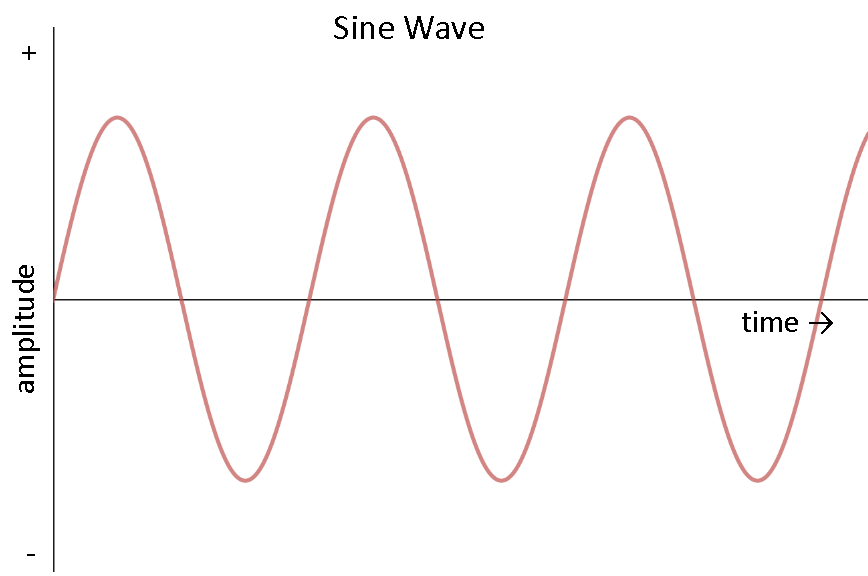
The tension or voltage of domestic electricity is an alternating signal because it alternates between positive and negative values. Its waveform is also sinusoidal, with a smooth, regula shape.
The electrons behave in a very different way, the flow of electrons changes direction 50 times (Spain) or 60 times (America) every second, as if the positive and negative poles of the socket were constantly changing places and the electric current is not always the same.

The variation of any electrical parameter over a period of time is an electric signal.
The tension or voltage of domestic electricity is an alternating signal because it alternates between positive and negative values. Its waveform is also sinusoidal, with a smooth, regula shape.
TYPES OF CURRENT: DIRECT CURRENT
Direct current:
Between the terminals of a battery, there is a continuous, stable flow of energy. This is called direct current.

Between the terminals of a battery, there is a continuous, stable flow of energy. This is called direct current.
TYPES OF CIRCUITS: COMBINATION CIRCUIT
Combination circuit:
A combination circuit has some elements connected in series and other elements connected in parallel. The current remains constant between elements that are connected in series and the voltage remains constant between elements that are connected in parallel.
TYPES OF CIRCUITS: PARALLEL CIRCUIT
Parallel circuit:
In a parallel circuit, the various components share the same input and ouput, in other words, the wires from both sides are joined together.

The potential difference is the same for each element. The equivalent resistance of this type of circuit would be:
If identical batteries are connected in parallel, the voltage of the circuit will not increase.
In a parallel circuit, the various components share the same input and ouput, in other words, the wires from both sides are joined together.
The potential difference is the same for each element. The equivalent resistance of this type of circuit would be:
If identical batteries are connected in parallel, the voltage of the circuit will not increase.
TYPES OF CIRCUITS: SERIES CIRCUIT
Series circuit:´
Two or more elements form a series circuit when the output of one element provides the input for the next element, the same current flows through all the elements and the total voltage is the sum of the tensions at the end of each element.
To calculate the total resistance of a circuit , we add the resistance values of each load, For example:
ELECTRICAL ENERGY AND POWER
Electrical energy.
If an electric current (I) flows at a particular tension (V) for a certain amount of time (t), we can calculate the energy (E) that is consumed: E= V x I x t.
The electrical energy is measured in joules (J).

Electric power.
The electric power of a load is the amount of energy that it can transform over a certain amount of time. Electric power is measured in watts (W) or kilowatts (kW).
If an electric current (I) flows at a particular tension (V), we can calculate the power (P) that is consumed: P= V x I
If we knowthe power of a load, we can calculate the electrical energy that it consumes over a certain amount of time:
E= P x t
If an electric current (I) flows at a particular tension (V) for a certain amount of time (t), we can calculate the energy (E) that is consumed: E= V x I x t.
The electrical energy is measured in joules (J).
Electric power.
The electric power of a load is the amount of energy that it can transform over a certain amount of time. Electric power is measured in watts (W) or kilowatts (kW).
If an electric current (I) flows at a particular tension (V), we can calculate the power (P) that is consumed: P= V x I
If we knowthe power of a load, we can calculate the electrical energy that it consumes over a certain amount of time:
E= P x t
Suscribirse a:
Comentarios (Atom)